
This annual test should be non-negotiable! So just do it!
Dealing with joint pain, fatigue, skin rashes, or brain fog? Your immune system may be working against you.
- Unexplained Fatigue, Joint Pain, or Brain Fog? These could be early signs of autoimmune activity. Your immune system may be inadvertently targeting you before symptoms escalate.
- Family History of Autoimmunity? Autoimmune conditions run in your family?
- Struggling with Thyroid, Skin, or Hormone Issues? From Hashimoto’s to psoriasis to hormonal imbalances, autoimmune drivers often go undetected
- Frustrated by Flare-Ups or Chronic Inflammation?
- Covid 19 issues still keeping you from feeling well and enjoying life?
Autoimmune diseases are born out of the relationship between genetic mutations, gut dysfunction and environmental factors. These factors can increase susceptibility to autoimmunity by affecting the overall reactivity and quality of the cells involved in the immune system. Environmental factors may include:
- Infections – EBV, CMV, HSV 1 & 2, VZV, Rubeola
- Chemicals – Pharmaceuticals, cigarette smoke, and others
- Dietary proteins and peptides – Gluten, casein, modified food antigens.
- Toxins – chemical toxins, heavy metals and mycotoxins
- Gut fungal infections
- Nutritional deficiencies
Diagnosing an autoimmune disease can be a monumentally exasperating task. The initial autoimmunity symptoms may include fatigue, aching tendons or muscles, inflammation, and low fever. Many patients are not diagnosed until these innocuous symptoms manifest into clinical complaints and sub-optimal health.
Diagnosis of autoimmune disorders is based on serological assays such as ANA, RF, ENA, and immune complexes. Detection of other autoantibodies can be employed for more specific determination of autoimmune diseases such as double-stranded DNA antibody elevation in lupus erythematosus, citrullinated peptide antibody in rheumatoid arthritis, actin and mitochondrial antibody detection in autoimmune liver disease. Furthermore, autoantibodies can determine the disease’s progress and whether or not therapy implementation has been effective.
Autoimmunity is a misdirected immune response. About 30 million Americans suffer from autoimmune disease and perhaps 1 out of 10 individuals worldwide
Among environmental factors are infectious pathogens, which may not only assault and weaken the body and the immune system, but which could also induce autoimmunity through a process called molecular mimicry between the pathogenic viruses and many human tissues.
This mimicry could cause an immune reaction in which antibodies produced against viral antigens may also attack the body’s own tissues. Subsequent viral infections are thought to cause exacerbation of the disease by further activation of the immune response against viral and self-antigens.
Three viruses, in particular, have been identified as the major players and contributors towards inflammation and autoimmune disorders: severe acute respiratory syndrome coronavirus 2 (SARS-CoV-2), Epstein-Barr virus (EBV), and human herpesvirus 6 (HHV-6).
The virus and its disease, COVID-19, have been associated with various autoimmune disorders including:
- Type 1 diabetes
- Graves’ disease
- Autoimmune hemolytic anemia
- Polyneuritis cranialis
- Post orthostatic tachycardia syndrome
- Systemic lupus erythematosus
- Antiphospholipid syndrome
- Guillain-Barré syndrome
- Rheumatoid arthritis
- Immune thrombocytopenic purpura
- Miller Fisher syndrome
- Kawasaki disease
- Vasculitis
Even Hypertension, Diabetes type II and Depression have now been considered to have autoimmune components
Epstein-Barr virus (EBV) or herpes type 4 is a ubiquitous human virus that infects almost all humans during their lifetime. EBV in children and in some adults causes the infection called mononucleosis, which results in the production first of IgM and then IgG antibodies against viral capsid antigen (EBV-VCA). Following the acute phase, the virus persists mainly in the epithelial cells and B lymphocytes for the rest of the afflicted person’s life.
Epstein-Barr nuclear antigen (EBNA) is another antigen that induces the production and proliferation of B cells, which are responsible for the generation of antibodies in the body. This is why EBV is associated with different proliferative and autoimmune disorders, including lymphomas, rheumatoid arthritis, Graves’ disease, Hashimoto’s disease, lupus, multiple sclerosis (MS), inflammatory bowel disease, celiac disease, autoimmune liver disease, type 1 diabetes, polyneuropathy and Sjögren’s syndrome
Human herpesvirus type 6 (HHV-6) type A and type B are neurotrophic viruses that cause the common childhood disease known as roseola. By age 3, 90-100% of humans are infected by HHV-6 via the nasal cavity. The olfactory pathway is the major route of entry into the nervous system. The virus persists in a variety of cells, including glial cells(brain and nervous system), for the rest of the afflicted person’s life. Immune reaction against HHV-6 results in the production of both IgM and IgG antibodies.
HHV-6 B is linked to several autoimmune and neurodegenerative disorders via molecular mimicry and other mechanisms. These include MS, Guillain-Barré syndrome, lupus, Sjögren’s syndrome, Hashimoto’s thyroiditis, Alzheimer’s disease, Parkinson’s disease, collagen vascular disease, epilepsy, and encephalitis, including Chronic Fatigue Syndrome.
It has been recognized that long-haul COVID, or long COVID, is a gateway to possible autoimmunity, especially to neuroautoimmunity. The long-term consequences of COVID-19 remain a major public health concern, particularly the persistent cognitive issues like brain fog and significant brain tissue loss.
This is especially troubling in relation to reactivation of latent herpesviruses, such as Epstein-Barr virus (EBV) and human herpesvirus-6 (HHV-6). These issues make it imperative to explore the mechanisms behind SARS-CoV-2-induced brain damage. It is likely that reactivation of several viruses is a part of every autoimmunity.
The discovery that spike protein persists in COVID patients’ plasma, brain and immune cells, and cytokines produced by the immune cells suggest that the prolonged symptoms of post-COVID stems from the presence of viral proteins and associated inflammatory response.
Moreover, increased plasma cytokine levels, disruption of the blood-brain barrier, and reactivation of latent herpesviruses have all been linked to the cognitive symptoms observed in long COVID patients. These symptoms, along with the affected organs, tissues, and cells, are not exclusive to long COVID; since 1969 this symptomatology has been observed in patients diagnosed with myalgic encephalomyelitis/chronic fatigue syndrome (ME/CFS). By 2002, evidence of immune dysfunction and autoimmunity in chronic fatigue syndrome was introduced, and people with this condition are now recognized as being at heightened risk for long COVID.
Recently, researchers have identified elevated levels of specific tissue antibodies in patients with long COVID, further supporting the involvement of hyperactivation of the immune system and autoimmune phenomena, particularly targeting the brain in long COVID patients. The involvement of latent viruses, hyperactivation of the immune system, the presence of tissue antibodies and associated autoimmune phenomena can lead a practitioner towards a very specific direction in ordering tests to identify patients suffering from autoimmune reactivity or disease brought about by long COVID. Thus, better testing leads to better treatment, because heightened risk for long COVID correlates with heightened levels of associated antibodies in people infected with SARS-CoV-2.
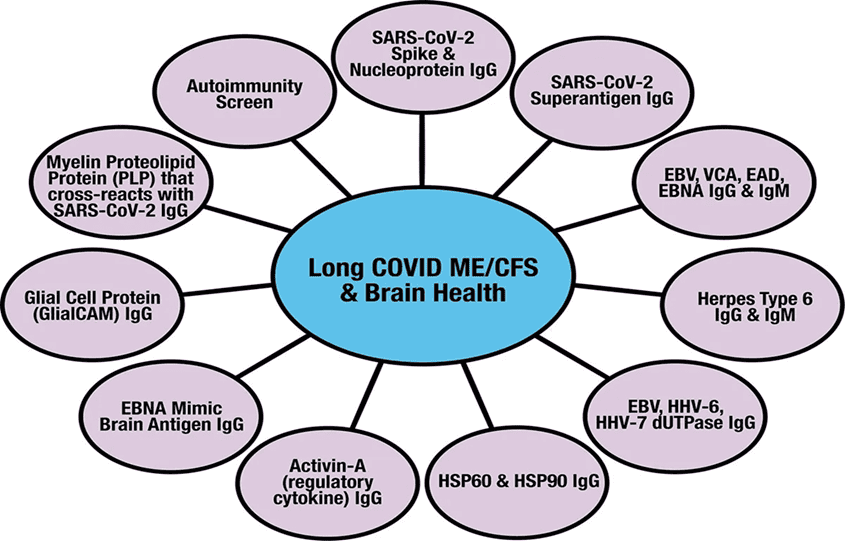
Can you see why an annual autoimmune test deserves a more proactive role in modern clinical care?
Routine, longitudinal testing allows clinicians to move beyond reactive medicine and toward earlier, more informed decision-making. When incorporated into annual evaluations, autoimmune panels can help you:
- Identify subclinical autoimmune activity before symptoms escalate
• Establish meaningful baseline immune markers for long-term monitoring
• Differentiate inflammatory, autoimmune, and non-autoimmune drivers of symptoms
• Guide earlier, more targeted interventions to reduce downstream complications
• Support clearer clinical conversations with patients whose symptoms are evolving but unexplained
Zoom Into Autoimmune Triggers and Take Control of Your Health
The Autoimmune Zoomer offers insights into potential root causes of chronic inflammation and immune dysfunction by analyzing a wide range of autoantibodies and tissue-specific immune responses across multiple systems. It also identifies early markers associated with autoimmune activation, leaky gut, and systemic immune reactivity—factors that can quickly contribute to neurological, gastrointestinal, musculoskeletal, and skin-related issues. If you’ve been feeling off without answers, this test provides a comprehensive look at how your immune system behaves and where it might be misfiring.
The Autoimmune Zoomer is a simple blood test that provides a comprehensive view of immune reactivity and early autoimmune patterns. It analyzes over 30 different tissues and organs for the presence of IgG and IgA autoantibodies, helping detect immune system misfires before they progress into full-blown autoimmune disease.
It also assesses intestinal permeability markers like Zonulin and occludin, offering insight into gut-immune interactions that may drive systemic inflammation and symptom flare- ups. With early detection and clear, visual reporting, you will receive a personalized strategy to modulate immune activity and protect long-term health.
Why Choose the Autoimmune Zoomer?
- Detect Early Signs of Autoimmune Activity: Screens for IgG and IgA antibodies against 30+ tissue-specific antigens to uncover immune reactivity before symptoms escalate into chronic disease.
- Connect Symptoms to Underlying Autoimmunity: Links fatigue, joint pain, skin issues, neurological symptoms, and more with immune responses to organs like thyroid, brain, and gut.
- Evaluate Leaky Gut & Immune Tolerance: Includes markers for intestinal permeability and immune barrier integrity to assess gut-driven triggers that may fuel autoimmunity.
- Personalize Prevention & Management Plans: Helps providers identify which systems are being targeted, enabling more precise lifestyle, nutrition, and supplement strategies.
- A key assessment for those who have symptoms that don’t respond to standard treatment.
- The test can help detect early immune reactivity and specific autoantibodies, helping guide more targeted and effective care.
Can you see why this test should be non-negotiable and a part of testing that one does annually or at least every other year? If all is well with the test, awesome. But if some parameters are elevated, you are ahead of the game to take preventive action. Early detection creates options. Options create better outcomes.