And it is even more tragic when we consider that a review paper published in the prestigious New England Journal of Medicine over a decade ago, listed 55 “diseases” that can be caused by consuming gluten foods. They listed osteoporosis, irritable bowel disease, inflammatory bowel disease, cancer, anemia and fatigue. But it has been shown that rheumatoid arthritis, lupus, multiple sclerosis and almost all other auto-immune diseases have been linked to gluten. But equally, many psychiatric or neurological conditions have been found to have a gluten intolerance link as well. They include, schizophrenia, ADD/ADHD, neuropathy, Parkinson’s disease, autism, dementia, depression, tremors, migraines, and many others.
Because gluten has this nasty ability to induce inflammation in so many individuals, it can be a disease-inducing factor in nearly every tissue of the body. Inflammation from gluten can be found in the liver, kidneys, heart, brain, skin, joints, intestine and even our endocrine organs that produce our hormones.
Yet some will say, “I don’t have any intestinal symptoms, so I couldn’t have a gluten problem.” Unfortunately this could not be further from the truth. While intestinal symptoms are certainly common with gluten, it is not always the case, even when the mucosal lining is already damaged. Many extra-intestinal tissues can be damaged and diseased without intestinal symptoms. And these non-celiac gluten sensitivity illnesses are far more common than celiac disease itself.
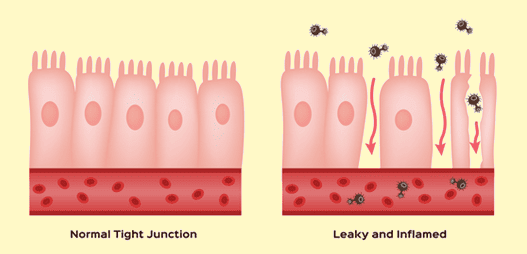
When the intestinal lining is damaged from gluten or from other causative agents, small leaks are formed and the intestine becomes much more permeable, letting complex particles out and into the body. These will include bacteria, and food particles to which the body produces an immunological response. The gut becomes leaky due to the damage and leads to autoimmune disease.
But this damage can also be from other parts of the wheat besides gluten. Wheat Germ Agglutinin (WGA) while not technically gluten but rather a lectin, can nevertheless be a very damaging particle in some individuals. It can be pro-inflammatory, immunotoxic, cardiotoxic, and when crossing the blood brain barrier, can be neurotoxic as well. In the brain it can attach to the coating on the nerves, the myelin sheath and potentiate damage to the neurons. In fact, when individuals with problems related to gluten grains share their most problematic complaints, the organ that seems to bear the brunt and give the most frustrating symptoms – the brain! It can be a real downer, influencing mind, mood, thinking, and emotions.
Folks, this is serious stuff. Several years ago Dr. Jonathan Wright, in his monthly newsletter wrote about his visit to Australia in the 1980s. He went to visit Dr. Christopher Reading. In his office he found a chart of over 100 individuals who had consulted Dr. Reading about a common, but “incurable” disease called Systemic Lupus Erythematosus or SLE or better known as lupus. They all had the common symptoms, skin rash, joint pain, fever, etc. However, everyone on this list had been symptom-free, without any medication and with negative blood tests for five or more years. How did he do this? Remarkably, they were all cured when he had them eliminate gluten grains from their diet.
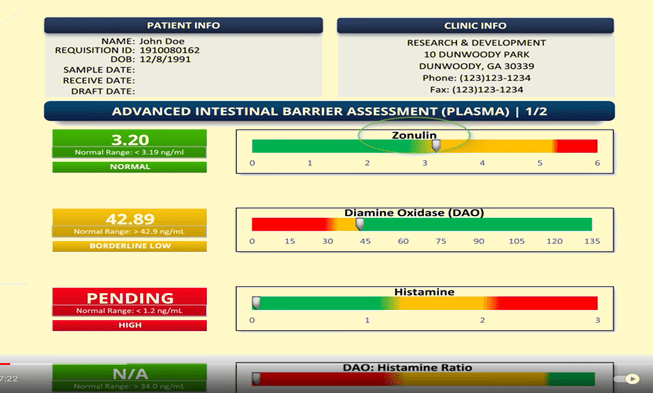
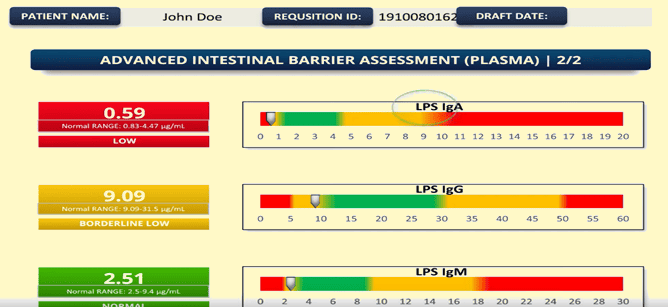
If you have any of the symptoms listed in the Gluten Sensitivity Disease Document and particularly if you have several of them you should get tested. I have selected for your attention the tests provided by Cyrex Labs, Arrays #2 – #5. You should especially consider Array 2 and 3 and then if these are positive, then you could consider following up with Array #4 and possibly #5. Array #2 is helpful in determining if you have a leaky gut (and it can be repaired). Array #3 is, hands down, the most comprehensive evaluation of whether you have a gluten problem.
Array #4 tests for other foods that will often cross-react with gluten as well as other foods that are often brought into the diet to substitute for the grains that have been removed.
Array#5 is simply the most comprehensive evaluation for an auto-immune potential. The usefulness of this Array is that the affected organ or tissue may reveal on-going inflammation 8-10 years before a pathological condition exists with symptoms that require medical intervention. This gives one time to intervene before then to enable the body to interrupt that process before it leads to irreversible tissue damage and disease.
Remember the number three cause of illness and death in the industrialized world is autoimmunity – surpassed only by cancer and heart disease. In the United States, 24 million people have been diagnosed with an autoimmune disease – but only 1/3 of those with autoimmunity know they have it. That means that somewhere around 72 million people are living with an autoimmune disease. It is not being looked for in standard screening tests and our present medical system waits until signs and symptoms are so severe that we already have the beginning of organ failure and irreversible damage.
There are three factors that lead to autoimmunity:
- Genetics – this only means vulnerability to the disease, not that your are necessarily destined to get it
- Environmental triggers – this can include gluten but also things like bacteria, viruses and toxic metals
- Intestinal permeability or leaky gut
You cannot do anything about your genes but you can evaluate for gluten and determine if your gut is leaky. If your gut is leaky it will most likely be the primary dysfunction in your body that leads to symptoms. When this is the case the most fundamental need you have is to repair and seal your intestinal lining and to rebalance you immune system. Don’t put off getting tested if you have symptoms.
If you would like to see a long list of label ingredients that typically contain hidden gluten, go to www.celiac.com .
Other helpful sites include www.celiaccenter.com and www.glutenfreesociety.org